
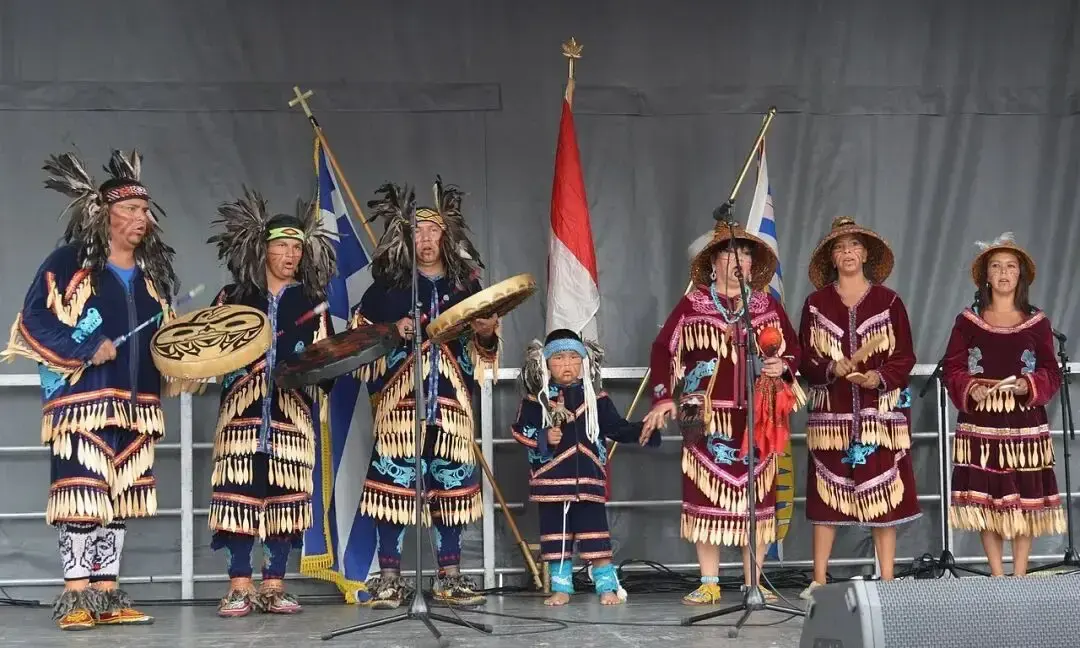
*I. The Cowichan Case: A Historic Ruling and Systemic Shock*
*1.1 Case Overview * On August 7, 2025, the Supreme Court of British Columbia rendered the most landmark Indigenous land rights decision in Canadian history in Cowichan Tribes v. Canada (Attorney General), 2025 BCSC 1490. The plaintiffs included Cowichan Tribes, Stz'uminus First Nation, Penelakut Tribe, Halalt First Nation, and Lyackson First Nation, acting on behalf of the descendants of the Cowichan people. The case lasted approximately five years, with 513 days of trial, resulting in an 863‑page judgment containing 3,728 paragraphs.
The plaintiffs claimed Aboriginal title to the Tl'uqtnus traditional summer village site and surrounding lands along the south arm of the Fraser River, within the present‑day City of Richmond. The claimed area included lands and submerged lands totaling approximately 1,846 acres. The defendants included the federal government, the BC government, the City of Richmond, the Vancouver Fraser Port Authority, the Musqueam Indian Band, and the Tsawwassen First Nation.
The court granted the plaintiffs' claim in part — it held that the Cowichan people possess Aboriginal title to approximately 732 acres (about 40% of the claimed 1,900 acres) and confirmed their Aboriginal right to fish for food in the south arm of the Fraser River.
*1.2 Key Legal Breakthroughs*
The Cowichan case is significant for several unprecedented legal findings.
First, Aboriginal title prevails over fee simple. The court explicitly ruled that Aboriginal title is a "prior and senior right" that overrides the fee simple interests held by private landowners. This is the first time a Canadian court has clearly held that Aboriginal title can exist over fee simple land and declared that some Crown grants of fee simple land were "defective and invalid."
Second, fee simple grants were found to be unconstitutional infringements. The court found that most fee simple grants issued within the Cowichan Title Lands lacked constitutional or statutory authority — the prevailing policy at the time should have excluded Indigenous lands from being sold to settlers. These grants constituted unjustified infringements of the Cowichan people's Aboriginal title.
Third, the indefeasibility principle of registered title was pierced. BC's Land Title Act establishes a presumption of indefeasibility for registered title, designed to protect the interests of good‑faith third parties. The court rejected the defendants' reliance on this principle, holding that Aboriginal title exists outside the land registration system and is not subject to its constraints.
Justice Young acknowledged that much of the evidence in the case spanned hundreds of years, particularly the period from 1790 to 1914, for which written records are "sparse and incomplete." Nevertheless, the court found that there remained "considerable evidence, including oral histories, historical written records, expert opinions, and ethnographic evidence" to support the ruling.
The court imposed a transitional suspension — the declaration of Aboriginal title and the invalidation of Crown grants were stayed for 18 months to allow the parties to negotiate an orderly transition of the lands.
*1.3 Strong Reactions and Appeals from the Defendants*
The ruling provoked strong reactions from all defendants. Richmond Mayor Malcolm Brodie stated: "The court has weakened the security of existing land titles under BC's Land Title Act. This unprecedented ruling jeopardizes the integrity of the entire land title system in British Columbia. Landowners across the province will no longer be able to rely solely on their land titles to prove absolute ownership. This decision cannot stand and must be appealed."
The City of Richmond, the BC government, the federal government, the Vancouver Fraser Port Authority, and the fellow‑defendants Musqueam Indian Band and Tsawwassen First Nation all filed notices of appeal within the appeal period. The Musqueam Band was particularly opposed to the ruling, pointing out that the land awarded to the Cowichan was nearly 200 acres larger than Musqueam's main reserve. BC Attorney General Niki Sharma warned that the decision could have "significant unintended consequences" for private fee simple property rights.
In September 2025, the BC government announced its appeal and also applied to the court for a stay of execution pending the appeal.
*1.4 Practical Impact on Private Owners: Legal Doctrine vs. Public Fear*
Although the ruling caused tremendous psychological shock among private landowners, the court's position on private property was more measured than media portrayals suggested.
In paragraphs 44, 1658, 2208, and 3516 of the judgment, the court made clear that the plaintiffs did not seek a declaration invalidating the fee simple interests of private owners, did not challenge private owners' fee simple interests, and did not seek to evict private owners from their lands. Justice Young further clarified in paragraph 3541 that the Cowichan case was not about reclaiming full ownership of private lands, but rather seeking a mechanism to negotiate the resolution of Aboriginal title, and that "the plaintiffs are not currently seeking exclusive use and occupation of privately held lands."
However, in mid‑October 2025, the City of Richmond sent a letter to approximately 150 residents within the affected area stating: "For properties located within the black‑lined area on the map, the court has declared that the property is subject to Aboriginal title, which may affect the status and validity of your property ownership." This letter greatly intensified residents' fear. The Cowichan lands are located in southeastern Richmond, including large farm estates, golf courses, industrial facilities, and port infrastructure, with a total market value exceeding $1.3 billion CAD. Among the more than 150 directly affected homeowners, two Chinese‑Canadian owners, Cai Yu and Deng Qi, who purchased their properties in 2016 and 2020 respectively, said they "felt cheated" — they had no idea at the time that the Cowichan had claimed the land, and their property values had since plummeted, even jeopardizing their mortgage renewals.
The Cowichan Tribes repeatedly clarified their position. Lyackson First Nation Chief Shana Thomas said: "We do not want to deepen division. We are here to build a just future based on truth and reconciliation." UBCIC Vice‑President Don Tom also emphasized: "This case is not about seizing private homes or threatening homeowners. The Cowichan are not seeking to invalidate the interests of private landowners."
*II. The Musqueam Agreement: Federal Recognition and Public Panic*
*2.1 Agreement Content and Nature*
On February 20, 2026, the federal government signed three agreements with the Musqueam First Nation. The core document, a Rights Recognition Agreement, recognizes that Musqueam holds Aboriginal rights, "including title," within its traditional territory. Musqueam's traditional territory spans approximately 533,000 hectares, covering most of Vancouver, Burnaby, Richmond, and Delta.
The 30‑page agreement was signed without being publicly released; it became available only weeks later. The agreement does not mention private property rights — the very issue that has been the focus of public concern since the Cowichan ruling. The essential nature of the agreement is that it is not a treaty or a land claims agreement, does not have constitutional‑level legal force, but rather establishes a framework for future negotiations between the federal government and Musqueam regarding land rights.
*2.2 Social Media Panic and Expert Clarifications*
After details of the agreement emerged, social media erupted in panic. One X (formerly Twitter) post claimed, "Mark Carney just gave away the entire City of Vancouver. Two million people's home land titles are gone." Another said, "Canada has signed an agreement with Musqueam giving them title to most of Vancouver." Some posts even claimed that Canada had "transferred control" of Vancouver to Musqueam.
Indigenous rights law experts and federal officials denied these claims. University of Saskatchewan law professor Dwight Newman noted that the agreement explicitly states it is not a treaty or land claims agreement, and therefore does not enjoy constitutional‑level protection. The agreement does not currently transfer any private property rights, but it also does not explicitly exclude private lands from potentially being part of the recognized area in the future. Newman further explained: "Musqueam is using the possibility of making claims on private land as leverage to negotiate compensation arrangements from the federal government in response to their land claims."
Darwin Hanna of Callison & Hanna law firm stated that the agreement paves the way for reconciliation, and by recognizing Aboriginal title rights, "provides an opportunity for land to return," allowing Indigenous nations to participate in the management of their ancestral lands through governance and other arrangements.
Federal Minister of Crown‑Indigenous Relations Rebecca Alty explicitly stated: "These agreements do not affect private property rights. Suggestions otherwise are simply false." Musqueam reiterated this position in its own statement, acknowledging that due to the Cowichan ruling, its agreement had attracted significant public attention. Musqueam Chief Wayne Sparrow's remarks from December are noteworthy: "Musqueam is not coming to take anyone's private property."
*2.3 Provincial Government Confusion and Criticism*
The BC government's reaction to the agreement was telling. Premier David Eby said two weeks after the signing that the federal government had not briefed him on the agreement's contents: "I attended the signing ceremony from the front row, but I received no briefing on what was in the agreement." BC Official Opposition interim leader Trevor Halford criticized Eby for misleading the public: "Are we supposed to believe the Premier just happened to walk into the signing ceremony with no idea what was going on? Stop pretending."
The federal government insisted the agreement's purpose was to allow Musqueam to resolve land rights issues through negotiation rather than litigation. A federal spokesperson said the agreement does not affect private property rights and noted that this approach avoids the kind of protracted 513‑day litigation seen in the Cowichan case.
However, leading Indigenous litigation expert Thomas Isaac noted that the agreement's language is "very vague." It merely says that Aboriginal title is recognized within the territory. "To say that private property rights are not affected is obviously a very vague statement."
*III. Social Impact: Fear, Misunderstanding, and a Divided Public*
*3.1 High Public Attention*
The Cowichan ruling and Musqueam agreement have caused widespread public concern. An Angus Reid Institute poll from October 2025 found that 52% of BC residents were closely or very closely following the Cowichan case. Among BC Conservative voters in the provincial election, 64% were highly attentive; among NDP voters, the figure was 48%.
More notably, two‑thirds of respondents believed the ruling could have "serious" consequences. Including those not following the issue, two‑thirds thought the ruling could lead to severe outcomes. Sixty percent of BC residents agreed that the BC government was right to appeal the ruling; only 12% said it was wrong, and 27% were unsure.
*3.2 Divisions Over Reconciliation*
The Angus Reid poll also revealed deep divisions over the reconciliation process. 60% of BC residents believed the Cowichan ruling would harm relations between Indigenous and non‑Indigenous peoples. Among property owners, that figure was higher (66%), while among non‑owners it was 48%. Nearly four‑fifths (about 80%) of BC Conservative voters held this view; slightly more than half of former BC NDP supporters agreed.
Regarding Premier Eby's approach to reconciliation, more than two‑fifths (44%) of residents believed the Eby government was "paying too much attention" to reconciliation; 27% said the attention was about right; 13% said too little. This deep division over the reconciliation process is a key background factor for understanding the social climate surrounding Indigenous land rights disputes.
*3.3 Misinformation and Social Tension*
As land rights disputes have heated up, misinformation has spread. The City of North Vancouver had to issue a warning about forged letters claiming that the Sḵwx̱wú7mesh (Squamish) and səlilwətaɬ (Tsleil‑Waututh) Nations had initiated legal proceedings affecting North Vancouver properties. The city quickly clarified that the letters were fake: "If you receive this letter or see it online, please ignore it."
More concerning is the rise of anti‑Indigenous racism in discussions around the Cowichan case. JFK Law firm wrote that "fear, confusion, and racism in public discourse" are spreading, and there is a "significant gap" between media and some political figures' interpretations of the ruling and the actual text of the judgment, creating unnecessary fear and division.
*3.4 Economic Ripple Effects*
Land rights disputes have already had tangible economic impacts on affected areas. Some property owners report that banks are uncertain about refinancing and lending due to title uncertainty — one owner encountered difficulties in refinancing, with the bank unsure how to handle properties in the disputed area. Businesses have also said they cannot obtain project loans from banks because of the land rights disputes.
In Richmond, where Chinese‑Canadian residents make up over 50% of the population, many Chinese‑Canadian owners bought properties without knowledge of the claims. Deng Qi, who purchased in 2020, said: "I had no idea at the time that the Cowichan had already claimed this land. Now my property's value has plummeted." Lai Yanhong, an immigrant in Richmond who is not directly affected, expressed a broader concern: "Once it happens, it can happen again. This is just the beginning. There may be more Indigenous land claims in the future."
IV. Evolution of the Legal Framework: DRIPA and Gitxaala
*4.1 DRIPA's Legislative Background and Implementation Progress*
In 2019, the BC Legislature passed the landmark Declaration on the Rights of Indigenous Peoples Act (DRIPA), the first legislation in Canada to incorporate the UN Declaration on the Rights of Indigenous Peoples (UNDRIP) into provincial law. DRIPA requires the provincial government, in consultation and cooperation, to align provincial laws with UNDRIP and to develop and implement an action plan.
The action plan includes 89 specific actions spanning five years (2022–2027). The latest annual report, released in June 2025, shows that 78 action plan items were in progress within the 2024‑2025 timeframe. The province also established a DRIPA secretariat to support government reconciliation efforts, ensure alignment of laws, policies, and practices with the Act, and created a $2 million Declaration Act Engagement Fund to support Indigenous participation in law alignment work.
However, DRIPA's implementation has not been smooth. Critics say its pace is too slow, while some political forces have called for its outright repeal — in December 2025, the Independent Contractors and Businesses Association (ICBA) issued a statement demanding that the Premier recall the legislature and repeal DRIPA and section 8.1 of the Interpretation Act.
*4.2 The Gitxaala Case: UNDRIP Moves from Principle to Legally Binding Force*
On December 5, 2025, the BC Court of Appeal issued a far‑reaching ruling in Gitxaala v. British Columbia (Chief Gold Commissioner), 2025 BCCA 430, marking UNDRIP's transition from principle to legally enforceable practice.
Case background: The Gitxaala Nation and Ehattesaht First Nation challenged BC's online mineral tenure registry system under the Mineral Tenure Act, which allowed "free miners" to automatically obtain mineral claims without Indigenous consultation. While the lower court found the system violated the consultation duty under section 35 of the Constitution Act, 1982, it treated UNDRIP as a "non‑binding international instrument" and held that section 3 of DRIPA was not justiciable.
The Court of Appeal overturned the lower court's decision. The majority held that DRIPA "incorporates UNDRIP into the positive law of British Columbia as a whole, with immediate legal effect." This means UNDRIP is no longer merely a policy guide but a mandatory interpretive framework for all BC laws.
The court further found that BC's online mineral tenure system, which automatically grants claims without prior consultation, violated UNDRIP Article 32(2), which requires "consultation and cooperation to obtain free and informed consent before approving any project affecting Indigenous lands and resources."
The Gitxaala case established three core principles:
First, the presumption of consistency with UNDRIP. BC's 2021 amendment to the Interpretation Act added section 8.1(3), providing that "every Act and regulation must be construed as being consistent with the Declaration." The court held this is not merely a tie‑breaker rule but an interpretive aid throughout the process — BC laws "are presumed to be consistent with UNDRIP" unless the legislature explicitly indicates otherwise.
Second, section 3 of DRIPA is justiciable. The court ruled that DRIPA's requirements that the government consult and cooperate with Indigenous peoples and take "all necessary measures" to align provincial laws with UNDRIP are enforceable obligations — courts can declare that provincial regimes are inconsistent with UNDRIP.
Third, UNDRIP is a "weighty source" of law. The court rejected the view of UNDRIP as a non‑binding international instrument, explicitly characterizing it as a "weighty source" for interpreting Canadian law.
*4.3 The Interconnections Among DRIPA, Cowichan, and Gitxaala*
Although the Cowichan and Gitxaala cases involve different areas of law, they point to a common underlying trend: Indigenous rights are moving from the abstract protection of section 35 of the Constitution Act to concrete, enforceable legal force. Cowichan affirmed substantively that Aboriginal title can exist over fee simple land and has priority over fee simple. Gitxaala affirmed procedurally that provincial legal systems must be consistent with UNDRIP, and courts have the power to strike down inconsistent laws.
Together, they mean that any provincial law, regulation, or administrative action in BC involving land and resource development will be subject to substantive scrutiny regarding Indigenous consultation and consent obligations. This will affect not only land title disputes but also resource development, infrastructure construction, urban planning, and many other fields.
*V. Haida Gwaii: A Precedent to Learn From*
Before the Cowichan case, British Columbia had already taken a significant step forward on Indigenous land rights. In May 2024, the BC government signed a land transfer agreement with the Council of the Haida Nation, formally recognizing the Haida Nation's Aboriginal title over all of Haida Gwaii.
In September 2025, the Supreme Court of British Columbia issued an order, consented to by the Haida Nation, BC, and Canada, declaring that the Haida Nation holds Aboriginal title to the entire Haida Gwaii region. This order explicitly protected private property rights — private lands on Haida Gwaii were unaffected.
The Haida Gwaii example demonstrates that resolving land rights issues through negotiation rather than litigation is possible, and that recognition of Aboriginal title can be achieved while safeguarding the stability of existing private property rights. This experience holds important lessons for the future direction of the Cowichan case and the Musqueam agreement.
VI. Controversy and Outlook: Institutional Transformation or Social Division?
*6.1 The Supporters' Position*
Indigenous groups that support the Cowichan ruling and the implementation of DRIPA argue that these judicial and legislative developments are necessary steps to fulfill the promise of section 35 of Canada's Constitution Act, 1982. Grand Chief Stewart Phillip of the Union of BC Indian Chiefs (UBCIC) stated: "The Cowichan achievement is a historic recognition of Aboriginal title and rights. This case also reminds us that Indigenous nations are forced to go to court because the Crown continues to fail to recognize and implement our rights in a decent manner."
UBCIC further emphasized that reconciliation cannot be delayed or denied through litigation — it is the Crown's choice of litigation over reconciliation that has created confusion, fuelled public fear, and deepened division.
*6.2 The Critics' Position*
Critics argue that these developments are shaking the very foundation of Canada's land title system. A National Post commentary noted that the Cowichan case shows fee simple land ownership cannot displace Aboriginal title, and the reality of land return is now manifesting — landowners are being told by their mayor that Indigenous land claims "may affect the status and validity of their property ownership," and banks are uncertain about project loans involving disputed areas.
Conservative critics go further, arguing that DRIPA is moving away from legal equality toward "race‑based rights." After the BC Court of Appeal ruled that UNDRIP has binding legal force, some groups have called for the immediate repeal of DRIPA. The BC Official Opposition Conservative Party has called for a moratorium on all Indigenous land rights negotiations until the Supreme Court of Canada clarifies the legal implications of the Cowichan case.
*6.3 Cautious Voices from Economists*
Economists and housing policy experts have focused on the impact of land title uncertainty on the real estate market. In Vancouver's market — characterized by high prices but sluggish transaction volumes — land rights disputes add a new dimension of risk to investment decisions. Some developers report that banks are more cautious in issuing loans when land title is in dispute. In the area affected by the Cowichan case, owners face refinancing difficulties and shrinking property values — the damage to market confidence cannot be ignored.
*6.4 The Road Ahead*
Looking forward, the outcome of the Cowichan appeal will be the most critical legal variable. The BC government and the City of Richmond have jointly appealed. The BC Court of Appeal's decision will determine whether the legal hierarchy between Aboriginal title and fee simple ownership is overturned or affirmed.
On the legislative front, the BC government continues to implement the DRIPA action plan, but political opposition is rising. The Gitxaala case established the principle of the mandatory application of UNDRIP, meaning future legal challenges will come not only from private interests but also from other Indigenous groups invoking UNDRIP to bring additional claims.
At the federal level, the federal government has eliminated the Underused Housing Tax (UHT), but on Indigenous land rights, it continues to advance a negotiation framework with Musqueam. Whether this framework can ultimately resolve land rights issues through negotiation rather than litigation will have an effect on the strategies of other Indigenous nations in BC.
On the social front, the public division over the reconciliation process will not be easily bridged in the short term. The 44% of BC residents who believe the provincial government is "paying too much attention" to reconciliation stand on one side; Indigenous peoples who say progress is "still too slow" stand on the other. The economic losses and psychological trauma suffered by private owners affected by land rights disputes — especially the 150 households in Richmond — represent the most real social cost of this institutional transformation.
---
Disclaimer: The data and analysis cited in this article are derived from public sources including court rulings, government announcements, academic research, and media reports, current as of mid‑April 2026. This article does not constitute legal advice. Readers should consult qualified legal professionals for advice on specific cases and legal issues. The Cowichan case is under appeal, with all defendants having filed appeals. The decision of the BC Court of Appeal will have a decisive impact on the final determination of the relevant legal issues.