
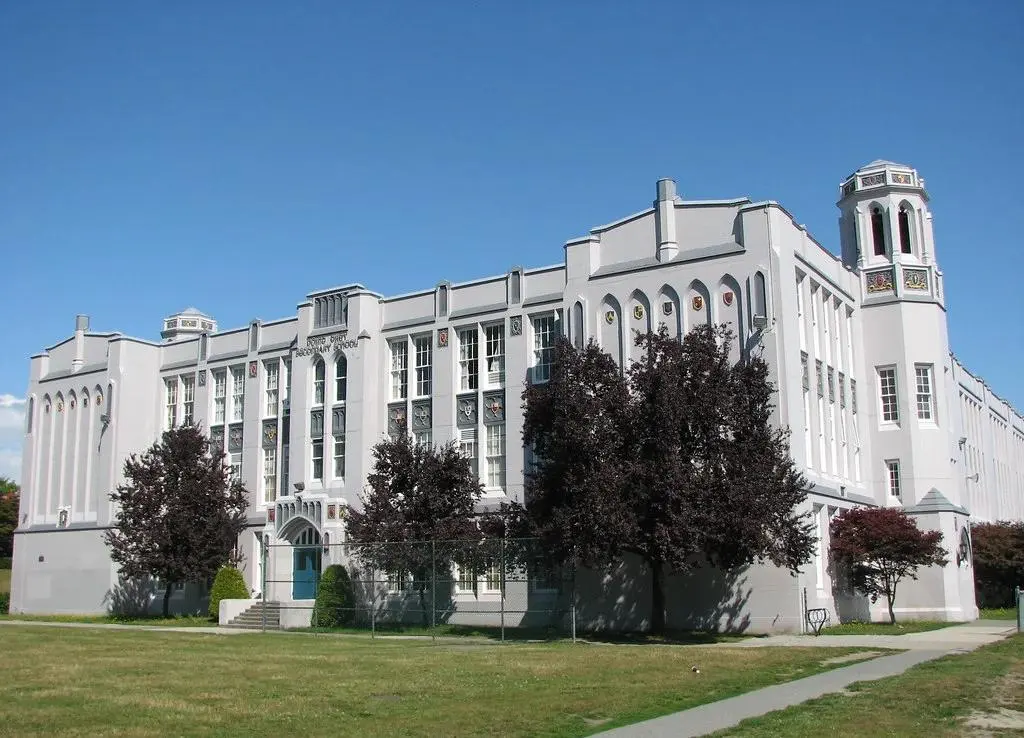
*1. Vancouver School Board (SD39)*
The Vancouver School Board is one of the largest and oldest public school districts in Western Canada, established in 1886. The district covers the entire city of Vancouver and includes 18 secondary schools, approximately 89 elementary schools, and 2 adult education centres — a total of about 107 public schools serving over 50,000 K‑12 students. International students number approximately 1,250, accounting for less than 3% of the population. The district’s location is excellent, just a 20‑minute drive from Vancouver International Airport and adjacent to the University of British Columbia (UBC), creating a strong academic atmosphere.
Academically, the Vancouver School Board is one of the top public districts in BC for graduation rates and scholarship awards, offering a wide range of AP and IB courses. Among its popular secondary schools, Lord Byng Secondary consistently ranks first among VSB public high schools — last year, 67% of its Grade 12 students graduated with distinction and went on to top universities in Canada and the US. University Hill Secondary is located within the UBC campus, making it the only VSB secondary school situated on a university campus, with extremely strong academic performance. Sir Winston Churchill Secondary is the largest public school in Vancouver, offering the IB program and French Immersion; it is also the school where current Canadian Prime Minister Justin Trudeau once taught.
A critical note: The Vancouver School Board’s website states that, starting in the 2026‑2027 school year, public elementary schools will stop accepting international student applications altogether. The international education program will only be open to students in grades 8 through 11. This policy change has significant implications for families planning to send younger children to study in Vancouver.
*2. West Vancouver Schools (SD45)*
West Vancouver Schools is one of the public districts with the highest academic reputation in BC, often called the “elite school among public secondary schools.” The district covers the city of West Vancouver, about a 10‑20 minute drive from downtown Vancouver. It includes 14 elementary schools and 3 public secondary schools, serving approximately 7,000 students. The community has the highest average household income in Canada and an extremely low crime rate, making it a typical high‑end, livable neighbourhood.
Academic performance is a provincial benchmark: a 98% high school graduation rate and over 80% university admission rate rank first in BC, with 70% of graduates successfully admitted to UBC for undergraduate studies. The three secondary schools rank 3rd, 4th, and 13th among all public high schools in the province. International students have the highest rate of admission to top universities in BC, and the relatively small number of international students ensures a pure English environment. In terms of curriculum, in addition to the regular high school program, the district offers AP, IB, and a wide range of enrichment courses and sports activities.
The three secondary schools each have their own character: Sentinel Secondary is known for its AP program and strong athletics, consistently ranking between the top 20 and 40 in the Fraser Institute rankings. Rockridge Secondary has modern facilities and ranks approximately 40‑70 in recent years. West Vancouver Secondary is a large, historic comprehensive school.
Home prices: In West Vancouver, detached houses typically cost between $2.5 million and $5+ million CAD, townhouses range from $1.4 million to $2.2 million, and condos from $800,000 to $1.5 million. This district is suitable for high‑net‑worth families with ample budgets who seek a top‑tier academic environment and an excellent community.
*3. North Vancouver School District (SD44)*
The North Vancouver School District is located northwest of downtown Vancouver, nestled between mountains and the ocean, offering a beautiful and quiet environment. The district includes 28 elementary schools and 7 public high schools, serving about 16,700 students, with international students making up approximately 6% of the population. The community is predominantly of British heritage, with Asians accounting for less than 10%.
Handsworth Secondary is the most sought‑after public secondary school in North Vancouver, with a brand‑new, state‑of‑the‑art facility built after 2022. It offers AP courses and ranks approximately 50‑80 in the Fraser Institute rankings. North Vancouver offers solid educational quality and a safe, family‑friendly community. The North Vancouver School District opened its first new K‑5 elementary school in 26 years in September 2026.
Home prices: Detached houses range from approximately $1.8 million to $3 million CAD, townhouses from $1.2 million to $1.8 million, and condos from $650,000 to $1.2 million. This district is suitable for families who value natural scenery, quality education, and more moderate prices compared to West Vancouver.
*4. Burnaby School District (SD41)*
The Burnaby School District is one of the largest public districts in Metro Vancouver, located at the geographic centre of the region. The SkyTrain reaches downtown Vancouver in 20 minutes. The district has 8 secondary schools and 41 elementary schools, serving about 23,700 students. All schools except Marlborough Elementary accept international students. International students make up about 8% of the population, and the district offers homestay services and orientation support.
In terms of curriculum, Burnaby offers North America’s largest AP program, covering subjects like calculus and statistics, allowing Grade 12 students to earn first‑year university credits. Visual and performing arts courses cover drama, dance, music, and more, with some schools featuring professional recording studios and television broadcast facilities. Popular secondary schools include Burnaby Mountain Secondary (known for excellent academics and a wide range of AP courses), Burnaby North Secondary, and Burnaby South Secondary (renowned for strong arts and sports programs). The district’s international student support system is mature — in 2024, it helped 85% of international students gain admission to their target institutions.
Home prices vary significantly by area: North Burnaby and the Burnaby Mountain school catchment have higher prices, while South Burnaby and the Burnaby Lake area are more moderate. This district is suitable for families who value AP course resources, transportation convenience, and a multicultural environment.
*5. Richmond School District (SD38)*
The Richmond School District was established in 1906 and is the fifth largest school district in BC. The district includes 11 secondary schools and 41 elementary schools, serving approximately 12,500 elementary students and 11,000 secondary students. Richmond is one of the cities with the highest proportion of Chinese residents, offering a culturally inclusive environment and convenient daily living.
Academically, Richmond is one of the top districts in BC for graduation rates and university admission. Among its public secondary schools, Steveston‑London Secondary ranks first, offering AP courses in calculus, physics, biology, and chemistry, as well as unique career preparation programs. Richmond Secondary is the only public secondary school in Richmond offering the IB Diploma Program, along with specialty programs like the Global Perspectives Program and AVID. Robert Alexander McMath Secondary ranks 21st in the province.
Home prices: Richmond has the highest average detached home prices in Metro Vancouver, though some families have relatively modest annual incomes. This district is suitable for families who value a Chinese‑friendly community atmosphere, multiculturalism, and IB program resources.
*6. Delta School District (SD37)*
The Delta School District is located in the southern part of Metro Vancouver, about a 20‑minute drive from Vancouver International Airport. It includes 7 secondary schools and 26 elementary schools distributed across three communities: Tsawwassen, Ladner, and North Delta. Delta has one of the lowest crime rates in Metro Vancouver — it is safe and quiet, surrounded on three sides by water, enjoys the most sunshine, and has a mild climate.
Academically, Delta’s graduation and university admission rates consistently rank in the top three in BC, with outstanding results on government exams. 90% of students are native English speakers, immersing international students in a pure English environment. All secondary schools offer AP courses, and some also offer IB programs. Popular secondary schools include Seaquam Secondary (IB program, consistently in the top 50 public high schools in the Fraser rankings), Delta Secondary (AP courses, specialty academies including dance, golf, film production, etc.), and Sands Secondary (AP courses, focus on student leadership development). Delta graduates receive over $400,000 CAD in scholarships each year.
Excellent value for money: The total annual cost is approximately $28,900 CAD (including tuition, homestay, and guardianship fees). This district is suitable for international families who value a safe environment, a pure English atmosphere, and high cost‑effectiveness.
*7. Surrey School District (SD36)*
The Surrey School District is the largest public district in BC, serving approximately 73,000 students in the cities of Surrey and White Rock, with 101 public elementary schools and about 27 secondary schools. The district offers a wide range of course options, including IB, AP, French Immersion, and a science lab program run in partnership with Simon Fraser University.
Most high schools rank in the top 30% of BC schools, with some top schools consistently in the top 15%. Elgin Park Secondary is consistently among the top 20 in the province, with a university admission rate exceeding 90%, offering numerous AP and honours courses. Semiahmoo Secondary is a historically prestigious public school in South Surrey.
Home prices: Detached houses in Surrey are significantly less expensive than in Richmond, yet the average household income is actually higher — making it an excellent value choice. This district is suitable for families who value affordability, course diversity, and a large‑school environment for their children.
*8. Coquitlam School District (SD43)*
The Coquitlam School District is the third largest public school district in BC, with 8 high schools, 14 middle schools, and approximately 47 elementary schools, serving about 34,000 students. The district covers Coquitlam, Port Coquitlam, and Port Moody, about a 30‑minute drive from downtown Vancouver. Coquitlam is the only district in Metro Vancouver that uses a three‑tier educational model, separating elementary, middle, and high schools into distinct stages. The district has been rated one of the best in BC by the Ministry of Education for many consecutive years, with a graduation rate of 95%.
Notable secondary schools include: Heritage Woods Secondary (the newest school in the district, one of the best public secondary schools in BC, with wireless internet throughout the campus); Dr. Charles Best Secondary (ranked in the top 20 public secondary schools in BC, with a strong academic atmosphere); Gleneagle Secondary (offers AP courses, and in partnership with Emily Carr University of Art + Design provides Grade 12 students with art and design learning opportunities); and Port Moody Secondary (offers the IB program).
International student tuition is $16,500 CAD per year (including medical insurance), with a $300 application fee. This district is suitable for families who value the three‑tier education model, innovative curriculum, and community safety.
*9. Langley School District (SD35)*
The Langley School District is located about 45 km east of Vancouver, in a quiet community where 95% of residents are native English speakers. The district includes 40 schools, serving over 20,000 students, and has offered an international student program since 1989. The proportion of international students is kept below 6%, ensuring good language immersion. The curriculum includes AP, IB, STEAM, and a wide variety of extracurricular activities. Walnut Grove Secondary is Langley’s largest and most popular secondary school, with approximately 2,300 students, offering specialty courses in programming, computers, and culinary arts.
This district is suitable for international families who value a pure English environment, affordability, and want to avoid the high housing prices of the core city. Tuition ranges from approximately $13,000 to $16,000 CAD per year.
*10. New Westminster School District (SD40)*
The New Westminster School District was one of the first public districts in Canada to accept international students, having done so since 1987. The district has only one large secondary school — New Westminster Secondary School — which is one of the largest and best‑equipped secondary schools in BC, accommodating 1,900 students in grades 9 through 12. The school offers the IB program and ranked 52nd in the province in the 2016‑2017 school year. Facilities include five computer labs, three sports fields, a running track, and a cafeteria.
This district is suitable for families who value a small‑city atmosphere, historical character, and want their child to attend a single, large, comprehensive secondary school.
*11. Maple Ridge – Pitt Meadows School District (SD42)*
The Maple Ridge – Pitt Meadows School District is located east of Vancouver, about a 55‑minute drive from downtown Vancouver. It includes 6 secondary schools and approximately 22 elementary schools, serving about 15,000 students, with approximately 450 international students. Each secondary school has between 600 and 1,500 students, the majority of whom are local — no more than 30 international students per school — ensuring a pure English environment. International student tuition is approximately $13,000 to $16,000 CAD per year. All teachers hold BC teaching certificates.
This district is suitable for budget‑conscious families who want an authentic Canadian public education experience while avoiding the high prices and intense competition of core urban areas.
- Other School Districts Worth Mentioning
Greater Victoria School District (SD61): Located in Victoria, BC’s capital, with a mild climate and beautiful environment, offering IB and AP courses. Suitable for families who prefer island living.
The Maple Ridge School District (SD42) has already been described in detail above — it is one of the most cost‑effective districts in Metro Vancouver.
*General Information*
Tuition reference: International student tuition at public secondary schools generally ranges from $13,000 to $16,000 CAD per year. Delta School District’s total annual cost including homestay is approximately $28,900 CAD; Coquitlam School District’s tuition is about $16,500 CAD per year.
Admission policies: Most districts use catchment areas based on home addresses. Popular catchments require at least two proof‑of‑address documents, and schools may refuse out‑of‑catchment applications due to capacity limits. Starting in the 2026‑2027 school year, the Vancouver School Board will stop accepting international student applications for elementary schools. Application channels for spring and fall 2026 are already open across most districts, and spaces in some popular catchments are limited — it is advisable to prepare materials as early as possible.
Rankings and references: The Fraser Institute publishes annual rankings of BC schools based on academic indicators such as provincial exam results. Rankings can serve as an important reference, but should not be the sole criterion. Families should also consider a school’s overall character, culture, and how well it matches their child’s individual needs.
*School Selection Advice*
There is no single “best” school district in Metro Vancouver — only the one that best fits your family. When choosing a school, I recommend considering the following factors:
First, clarify your child’s academic needs. If your child aims to gain admission to top North American universities, the schools in West Vancouver and Vancouver’s west side have significant advantages in academic reputation and university admission rates. If your child has a particular interest (arts, sports, STEM, etc.), prioritize schools that offer corresponding specialty programs.
Second, balance budget with educational quality. West Vancouver and Vancouver’s west side have the highest housing prices. Eastern districts like Delta, Langley, and Maple Ridge are known for high cost‑effectiveness — they offer equally strong educational quality but with more affordable housing and tuition.
Third, consider community environment and lifestyle. Each district corresponds to a different community culture — Vancouver’s west side has a strong academic atmosphere but fierce competition; Burnaby is convenient and multicultural; Richmond offers convenient daily living for Chinese speakers; North and West Vancouver have beautiful natural scenery but high housing prices; Delta is safe, quiet, and offers a pure English environment. Choosing a community where both parents and children feel comfortable and secure is just as important as choosing a good school.
Fourth, pay attention to policy changes. Starting in 2026, the Vancouver School Board will stop accepting international student applications for elementary schools. Admission quotas and application deadlines are also changing dynamically across districts. It is advisable to contact the international education department of your target district directly for the most current information.
Fifth, seek professional advice. Consult educational advisors or real estate professionals familiar with the Metro Vancouver market. Combine site visits, school rankings, and parent reviews to make a well‑rounded decision.
I wish every parent the best in finding the ideal environment for their child to grow — and for education to become your family’s most worthwhile investment.