
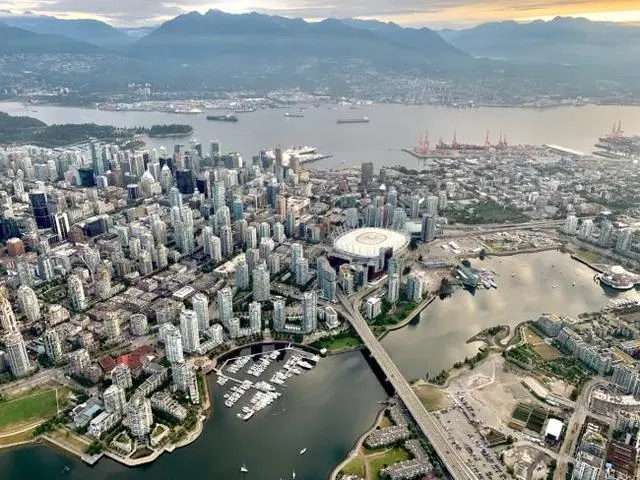
*I. Introduction: From "Abnormal" to "New Normal"*
The Metro Vancouver real estate market has long been regarded as one of the benchmark regions for global asset hedging. However, after the price surge driven by the pandemic in 2020‑2022, the market has gradually entered a downward channel since 2023. Total residential sales volume for the full year 2025 fell to 23,800 units, the lowest level since 2000. The total assessed value of all properties in Metro Vancouver shrank from $2.01 trillion CAD in 2025 to $1.92 trillion.
Entering 2026, the market has not seen the anticipated "spring recovery." Andrew Lis, Chief Economist and Vice President of Data Analytics at Greater Vancouver REALTORS® (GVR), characterizes the current market as a "new normal" — sales activity continues to lag the long‑term average, both buyers and sellers are taking a wait‑and‑see approach, and prices are not showing significant one‑way volatility. GVR data shows that in February 2026, residential sales totalled 1,648 units, down 9.8% year‑over‑year and 28.7% below the 10‑year seasonal average. March sales increased about 23% month‑over‑month to 2,032 units, but were still down 2.8% year‑over‑year and 31.8% below the 10‑year average.
This set of data paints a clear and consistent picture: the Metro Vancouver real estate market is in a deep buyer's market range, and this state is not a short‑term fluctuation but is solidifying into a "new normal."
II. Supply‑Demand Imbalance: The Ongoing Contest Between High Inventory and Weak Demand
2.1 Supply Side: Historically High Inventory
To understand the current trajectory of Metro Vancouver real estate, one must first examine the fundamental imbalance in supply and demand. On the supply side, there has been a rare "double release": on one hand, new listings in the resale market remain persistently high; on the other hand, pre‑sale projects that broke ground several years ago are being completed one after another, creating a large wave of new home supply.
CMHC's Spring 2026 Housing Supply Report notes that the loose supply conditions in Metro Vancouver in 2025 were not a true "market balance" but rather shaped by a "temporal coincidence" of weak demand and a surge in supply. Completions reached historic highs — several years of strong housing starts came to market in a concentrated period, increasing rental vacancy rates, suppressing rent growth, and putting downward pressure on resale prices.
Looking at first‑quarter 2026 data: new listings in March totalled 5,792, down 10.3% from March 2025 but still 4.9% above the 10‑year seasonal average. Total properties listed for sale on the MLS system reached 14,774 units, 38% above the 10‑year seasonal average. In the Fraser Valley, active inventory reached 9,201 units, maintaining a buyer‑dominated market.
*2.2 Demand Side: A Rare Reversal in Population Growth*
Weakness on the demand side is equally significant. The federal government's sharp cuts to temporary foreign worker and international student quotas have directly removed the underlying demand for condo rentals and purchases. Royal LePage President and CEO Phil Soper put it bluntly: "Many condo customers have simply disappeared."
Rishi Sondhi, economist at TD Economics, notes that Canada will see "another year of near‑zero population growth" in 2026, driven by tighter immigration policies and a net outflow of non‑permanent residents. This trend has a particularly acute impact on Metro Vancouver. TD forecasts that BC's economic growth will slow to about 1.2%, well below its long‑term trend, and slower population growth will continue to restrain labour force expansion, keeping employment growth subdued in 2026.
*2.3 Key Indicator of Supply‑Demand Balance*
The sales‑to‑active listings ratio is one of the core indicators for measuring market balance. Historical data shows that when the ratio consistently falls below 12%, prices face downward pressure; when it exceeds 20% for several months, prices face upward pressure. In March 2026, the overall ratio for Metro Vancouver was 14.2%, with detached houses at 11% (still below the 12% threshold), townhouses at 17.2%, and condos at 15.7%.
This means the overall market remains in a buyer's market range, but townhouses and condos are approaching the lower edge of the balanced range.
*III. Price Trends: Signs of Divergence Amid Broad Declines*
*3.1 Overall Benchmark Price*
As of March 2026, the MLS® Home Price Index composite benchmark price for all residential properties in Metro Vancouver was $1,104,300 CAD, down 6.8% from March 2025 and up a marginal 0.4% from February 2026. On a month‑over‑month basis, the slope of price declines is flattening — the composite benchmark fell only 0.1% from January to February 2026, and then posted a small increase from February to March.
*3.2 Price Trends by Housing Type*
Detached houses: March sales reached 571 units, up 8.3% year‑over‑year. The benchmark price was $1,854,800, down 8.2% year‑over‑year but up 1% month‑over‑month from February. Notably, this is the first month‑over‑month positive gain for the detached segment after several months of declines. GVR's Andrew Lis noted: "Transactions in the multi‑family market are still slower, while the detached segment may be waking up — sales are rising and new listings are down from last year."
Condos: March sales totalled 999 units, down 7.8% year‑over‑year. The benchmark price was $706,700, down 7.8% year‑over‑year and down 0.2% month‑over‑month. The condo segment remains the most vulnerable part of the market. Royal LePage data shows that the median condo price in Vancouver fell 4.8% year‑over‑year in the first quarter, while Toronto fell 6.5%. Royal LePage expects Metro Vancouver condo prices to fall another 3% for the full year 2026 to approximately $712,853.
Townhouses: March sales totalled 446 units, down 5.5% year‑over‑year. The benchmark price was $1,047,100, down 5.7% year‑over‑year but up 0.1% month‑over‑month. Notably, townhouse sale prices have posted small increases for two consecutive months (up 0.3% in February and another 0.1% in March). Under the influence of various housing stimulus measures, buyers with genuine needs are beginning to enter the market.
3.3 Forecast Comparison Across Three Major Institutions
The major institutions broadly agree on the direction of Metro Vancouver home prices in 2026, though with slight differences in magnitude:
· Royal LePage: Forecasts that Metro Vancouver's composite home price in the fourth quarter of 2026 will fall 3.5% year‑over‑year to approximately $1,147,868. The median detached home price is expected to fall 5% to about $1.61 million, and the median condo price to fall 3% to about $712,000. · BCREA (BC Real Estate Association): Expects the average home price in BC to rise about 3% to $982,800 in 2026, but this increase largely reflects a "composition effect" — a sales recovery in high‑priced markets of the Lower Mainland catching up to the rest of the province — rather than a substantive overall price rebound. · CMHC: Expects only "marginal growth" in sales and prices in Metro Vancouver in 2026 and 2027, with high inventory continuing to constrain gains.
IV. Regional Divergence: Notable Differences Between Core and Peripheral Areas, East and West
*4.1 Fraser Valley vs. Core Metro Vancouver*
The divergence in the Metro Vancouver market is evident not only between housing types but also between regions. In the Fraser Valley Real Estate Board (FVREB) area, the January 2026 benchmark price fell below $900,000 for the first time since spring 2021, dropping to $897,000, down 6.9% year‑over‑year. However, March data showed a sharp 20% month‑over‑month increase in sales volume in the Fraser Valley, with the benchmark price rising 0.3% year‑over‑year to $898,300. FVREB Chair Ishaq Ismail said: "We are encouraged to see early signs of price stabilization in the Fraser Valley." Improving inventory and incentives are creating opportunities for buyers.
*4.2 Structural Divergence Between East and West Vancouver*
A more profound regional divergence is occurring within the City of Vancouver itself. GVR's price index report shows that prices for all property types in Vancouver West have fallen 8.4% over the past decade, and West Vancouver has fallen 5.8%. Over the same period, detached home prices in Vancouver East have risen 23.4%. Westside real estate agent Lorne Goldman believes the fundamental reason high‑end communities have been hit hardest is "how much of that demand came from foreign buyers." With the foreign buyer ban and the speculation and vacancy tax, the high‑end market — which relies on external capital — has borne the brunt.
*4.3 BC Assessment Valuations Down Across the Board*
BC Assessment's 2026 valuation data shows that the total assessed value of residential properties in Metro Vancouver fell from $2.01 trillion to $1.92 trillion. The declines by region were as follows:
Region Detached Home Valuation Decline White Rock -9% Richmond -8% Langley -8% UBC University Area -8% City of Vancouver -5% Surrey -6%
The most significant declines occurred in areas that historically relied most heavily on external demand — notably Chinese‑majority communities and university neighbourhoods. The average detached home price in Surrey is approximately $1.464 million, while in the City of Vancouver it is approximately $2.092 million.
*V. Policy Environment: Increased Tax Burden and Structural Obstacles*
*5.1 Increase in the Speculation and Vacancy Tax (SVT)*
Effective January 1, 2026, BC's Speculation and Vacancy Tax rates were formally increased: from 2% to 3% for foreign owners and those who do not pay tax on global income, and from 0.5% to 1% for Canadian citizens or permanent residents. This is already the second round of increases — the 2026 BC budget further raised the SVT rate for foreign owners to 4%.
In stark contrast to the federal government's simultaneous elimination of the Underused Housing Tax (UHT), BC has chosen to continue escalating its provincial tax policies, adding additional carrying cost pressure on investors.
*5.2 Development Costs and Project Stalls*
The development side also faces serious challenges. CMHC's report notes that housing starts have fallen for two consecutive years, and an increase in project cancellations will reduce the number of available units in the coming years. Developers face a triple squeeze of rising labour costs, material costs, and regulatory fees, while pre‑sale activity remains sluggish — investors and end‑users are losing interest in new projects because prices are generally higher than for resale homes. Many developers are being forced to move to areas farther from the city centre to find more affordable land.
At the same time, BC's budget increased the interest rate on property tax deferrals from 1.2% to 3.5%, and provincial sales tax (PST) was extended to commercial real estate services starting October 2026. The only bright spot is the expansion of the additional school tax exemption for purpose‑built rental buildings from projects with 100+ units to all buildings with four or more units.
*5.3 Developers' United Call for Policy Relief*
In July 2025, 26 BC real estate developers and industry leaders issued a joint open letter urging federal and provincial leaders to relax interventionist policies targeting foreign buyers in the real estate market. The developers noted that with many housing projects stalled due to the current unusually severe economic environment, policy relief was urgent. However, as of the first quarter of 2026, no substantive policy easing had materialized.
*VI. Macroeconomic and Interest Rate Environment: Both Support and Constraints*
*6.1 Interest Rate "Plateau"*
In January 2026, the Bank of Canada held its benchmark rate at 2.25%, marking the second consecutive hold after pausing the rate‑cut cycle in December 2025. Governor Tiff Macklem said the policy rate was "appropriate" in the current environment but warned that "the direction of the next policy rate change is difficult to predict."
BMO Capital Markets expects the rate‑cut cycle to be largely over — the four cuts in 2025 (totalling 100 basis points) provided support to the economy, but inflation remains slightly above target, so further cuts are unlikely in 2026, nor are increases expected. BMO senior economist Sal Guatieri noted: "Interest rates are now at the low end of the neutral range, and with inflation still a bit above target, the cutting cycle is likely finished."
TD is more cautious, expecting the Bank to "remain on hold" in 2026, which further limits the potential for a rapid price rebound.
*6.2 Impact of Middle East Conflict on Fixed Rates*
In spring 2026, the escalation of the Middle East conflict pushed up bond yields and fixed mortgage rates. Andrew Lis noted: "While tariff‑related political uncertainty has diminished compared to early 2025, the Middle East conflict is now pushing up bond yields and fixed mortgage rates." This transmission mechanism places new pressure on homebuying demand — before buyers have time to digest rate fluctuations, higher mortgage costs erode purchasing power.
*6.3 BC Economic Slowdown*
TD Economics forecasts that BC's real GDP growth will slow to about 1.2% in 2026, well below its long‑term trend, before recovering modestly to about 1.8% in 2027. Trade uncertainty, slower population growth, and a cooling housing sector are all suppressing economic activity. In addition, the BC government faces a $13.3 billion fiscal deficit (2.9% of GDP), one of the largest on record. TD warns that rising debt levels and spending growth that continues to outpace revenues leave BC more vulnerable to potential economic shocks.
On the employment front, Metro Vancouver is expected to add only about 10,000 new jobs per year (2026‑2027). Under the impact of AI technology, white‑collar jobs face a displacement risk of approximately 21,000‑40,000 positions. The unemployment rate is expected to peak near 6.8% in 2026.
*VII. Market Outlook and Strategic Recommendations*
*7.1 2026: A "Transition Year," Not a "Rebound Year"*
Benjamin Tal, Deputy Chief Economist at CIBC Capital Markets, defines 2026 as a "transition year" — moving from something bad to something better. He noted: "People have been hesitating because they expected more rate cuts. But the Bank of Canada has made it clear that it won't cut further unless something very bad happens. So more people will enter the market, realizing that from the Bank's perspective, this is the bottom." Tal forecasts a "good recovery" in 2027.
TD Economics is more conservative, expecting overall moderate declines in Metro Vancouver in 2026: detached prices down about 5%, condos down about 3%, and the composite down about 3.5%. A true recovery may have to wait until 2027, when pent‑up demand and improved affordability will together support market activity.
*7.2 Differentiated Recommendations by Housing Type*
Detached houses: Although prices are still down year‑over‑year, month‑over‑month stabilization signals are appearing. The gap between sales and new listings is improving. For buyers with genuine housing needs, the current window may be one of the rare opportunities to enter the market in recent years. GVR's chief economist noted that detached houses are "waking up" — a judgment worth taking seriously.
Condos: The core problem facing the condo market is the double squeeze of oversupply and collapsed demand. CMHC points out that pre‑sale activity remains sluggish, investor and end‑user interest is waning, and the downside price space has not yet been fully released. Unless immigration policy reverses or interest rates drop significantly, the adjustment cycle for the condo segment may last longer. For pre‑sale investors, the risks are particularly acute — a Two Harbour Green condo in downtown Vancouver recently sold for $4.2 million, below its 2009 purchase price, highlighting the depth of the high‑end condo correction.
Townhouses: Townhouses are the most stable segment among the three major housing types, with two consecutive months of month‑over‑month price increases. Buyers with genuine needs are entering the market. For buyers seeking a balance of flexibility and security, townhouses offer advantages in terms of space utilization, carrying costs, and liquidity.
*7.3 Investor Strategy Adjustments*
For long‑term investors, the Metro Vancouver real estate market has gradually released valuation bubbles after a deep adjustment. Inflation‑adjusted Canadian home prices have returned to 2017 levels, providing an important value anchor for value investors. Royal LePage characterizes 2026 as a "reset year" rather than a "rebound year" — a strategic opportunity for buyers to adjust their positions using a relatively low‑price window.
However, investors must fully consider rising carrying costs. The ongoing increases in the speculation and vacancy tax, the sharp rise in the property tax deferral interest rate, and the expansion of the PST all mean that the cash‑flow pressure of holding real estate in Metro Vancouver is increasing. After the market myth of "people leave but the property stays," Metro Vancouver real estate is entering a new phase that places greater emphasis on real value and holding security.
*VIII. Conclusion*
In 2026, the Metro Vancouver real estate market is in a deep cycle of multi‑dimensional structural adjustment. Overall, the market has firmly shifted to a buyer's dominance: inventory is at historical highs, sales volume continues to lag the 10‑year average, and benchmark prices are down year‑over‑year across the board. However, the market is not monolithic — the detached segment is showing early signs of stabilization, townhouses have posted two consecutive months of price increases, and the Fraser Valley region is also showing signs of recovery driven by seasonal factors.
The core factors driving the current adjustment include: a historic reversal in population growth, a sharp tightening of immigration policy, the continued squeeze on speculative demand, a lagged surge in supply, and the suppression of buyer confidence by global macroeconomic uncertainty. These factors are unlikely to reverse fundamentally in the short term, meaning that Metro Vancouver's real estate market will likely maintain a "stable volume, weak price" pattern through most of 2026.
For buyers with genuine housing needs, the current market environment offers a degree of choice and bargaining power rarely seen in recent years, but they must carefully assess their own cash‑flow capacity. For investors, 2026 is more like a "portfolio rebalancing year" — in the midst of a deep market adjustment, identify quality assets that have been unfairly beaten down and patiently wait for the next cycle to begin. As CIBC economist Benjamin Tal put it: "2026 is the transition year; 2027 is the recovery year."
---
Disclaimer: All data cited in this article come from public sources, including public reports from Greater Vancouver REALTORS® (GVR), the British Columbia Real Estate Association (BCREA), Canada Mortgage and Housing Corporation (CMHC), TD Economics, BMO Capital Markets, Royal LePage, BC Assessment, the Fraser Valley Real Estate Board (FVREB), and the Canadian Real Estate Association (CREA). All data are current as of mid‑April 2026. This article does not constitute investment advice. Readers should make their own careful decisions based on their individual circumstances.