
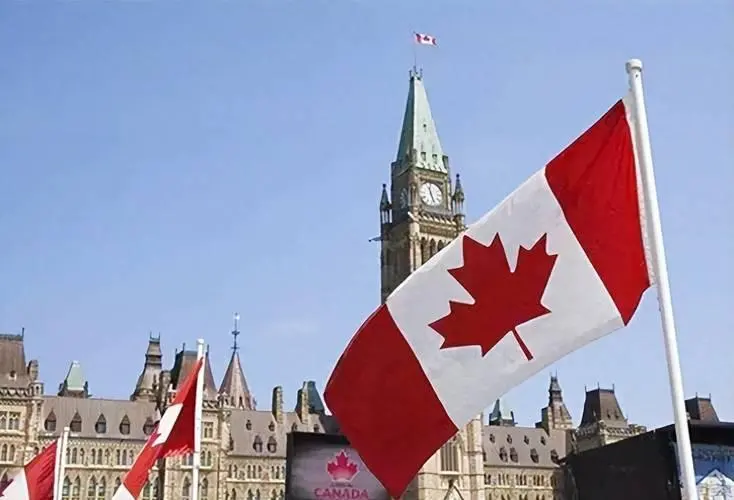
*1. Why is Vancouver consistently ranked one of the world's most livable cities?*
Vancouver is the only city in North America that has consistently ranked among the global top 10 for livability. According to the Economist Intelligence Unit's Global Liveability Index 2025, Vancouver scored an impressive 95.8 points, ranking 10th globally and 1st in North America. The index evaluates 173 cities across five categories: stability, healthcare, culture & environment, education, and infrastructure. Vancouver achieved a perfect score in the culture and environment category. Moreover, it has been named Canada's most livable city for many consecutive years.
For immigrants, "livability" is not an abstract concept — it means breathing some of the cleanest air in the world every day, children receiving a world‑class public education for free, and seniors benefiting from Canada's comprehensive universal healthcare.
Vancouver is the only major Canadian metropolis surrounded by ocean, mountains, and forests. Step outside your door, and within minutes you can stroll along the ocean. A few more minutes take you through ancient forests. Want to ski? Cypress, Seymour, and Grouse Mountain — three major ski resorts — are right in North Vancouver. Fancy a hike? Classic trails like Bowen Lookout, St. Mark's Summit, and Mount Seymour are all within an hour's drive.
What many don't know is that Vancouver also embraces a unique concept called "Vancouverism" — the city enforces building height restrictions to protect mountain and ocean views from being blocked. Living here, you enjoy big‑city convenience while feeling like you're never truly inside a city.
*2. A "Second Home" for Chinese Immigrants*
Some say you don't need English to live in Vancouver — that might be an exaggeration, but it's not without reason.
The Chinese population in Metro Vancouver exceeds 25%. Richmond, in particular, has become the first city in North America with a "Chinese‑majority" population (55%). What does this density mean? Major places like the airport, shopping malls, hospitals, and banks widely offer Chinese‑language services. Chinese supermarkets (T&T, Foody, Fresh St., etc.) stock familiar products from home — from Lee Kum Kee soy sauce to Wong Lo Kat herbal tea. New immigrants don't feel overwhelmed by language barriers, and their adjustment period is significantly shortened.
Even more importantly, locals are generally friendly and inclusive — they don't treat you differently just because you're a foreigner. Many immigrants feel this deeply after they arrive.
Beyond the mature commercial infrastructure, Metro Vancouver also boasts a well‑established newcomer settlement support system. SUCCESS (United Chinese Community Enrichment Services Society) is one of the most influential immigrant service organizations in the region, with service centres in Vancouver, Burnaby, Richmond, Surrey, Delta, and the Tri‑Cities. They provide free settlement counselling, language training, employment guidance, seniors' services, and comprehensive support. Additionally, neighbourhoods like Richmond have "Chinese Living Centres" offering one‑stop services — from immigration advice and legal help to SIN card application — all with volunteer guidance at no cost.
*3. Education: Paving a Quality Path for the Next Generation*
Having children educated in Vancouver is one of the ultimate motivations for countless Chinese immigrant families.
British Columbia (BC) has a world‑class K‑12 education system. Vancouver public schools are completely free for residents (including permanent residents and children of work permit holders), with stable teaching quality and a transparent catchment system. According to the Fraser Institute's 2025 BC School Rankings, public elementary schools in Metro Vancouver perform strongly. In popular catchments like West Vancouver, Richmond, and Vancouver, more than 32 public elementary schools score 8 or above (out of 10).
At the secondary level, University Hill Secondary in Vancouver's west side leads public high schools with a score of 9.2 — over 90% of its graduates enter top Canadian universities. Lord Byng Secondary follows closely at 8.8, balancing academic and arts programs. Across BC, 26 public and private elementary schools achieved a perfect score, and Vancouver alone has 8 of them — the highest in the province.
For higher education, the globally top‑50 University of British Columbia (UBC) is located in Vancouver's west side, and Simon Fraser University (SFU) on Burnaby Mountain has also produced many talented graduates. Your child can complete a world‑class education chain from K‑12 through university without leaving the province.
Vancouver schools operate on a catchment system — which school your child attends depends mainly on your home address. That's why many families prioritize school catchments when buying a home. While this has pushed up prices in popular school zones, it also gives parents more control over their children's educational path.
*4. Employment: More Than a "Retirement City" — It's a Tech Hub*
Vancouver is often mistakenly seen as just a "lying flat" livable city. But in fact, it's rapidly rising as an economic and tech centre on Canada's west coast.
In Vancouver alone, one out of every ten jobs is in the tech sector. Microsoft recently announced a massive $19 billion CAD investment in Canada to expand AI and cloud infrastructure, and the Vancouver‑Seattle corridor is becoming a new North American AI hub. According to BC's labour market outlook, the province's tech services sector is expected to generate over 160,000 new job openings in the next decade. Vancouver has strong fundamentals in SaaS, game development, and green tech, and more and more Silicon Valley companies are looking to this most livable North American metropolis for talent.
Vancouver's economy is no longer just about real estate and port trade. Digital media, film production, aerospace, clean technology, and life sciences are all expanding rapidly. The federal Start‑Up Visa (SUV) program, expanded in 2023, has become a key pathway for Chinese tech talent to enter Canada and settle in Metro Vancouver.
Moreover, demand for non‑purely‑technical roles — AI product managers, AI project managers, AI data roles — is growing fast, offering new entry points for newcomers with liberal arts backgrounds or career‑changers.
To be fair, the job market in Vancouver is competitive. Canada's overall tax rates are relatively high, and the entrepreneurial environment differs from mainland China or Hong Kong. But for Chinese newcomers with a North American education and professional skills, the opportunities far outweigh the challenges.
*5. Healthcare: Free + High Quality — Peace of Mind After Landing*
Canada's universal healthcare (MSP — Medical Services Plan in BC) is a core highlight of immigrant benefits in Vancouver. BC residents pay nothing out‑of‑pocket to see a family doctor, visit a hospital emergency room, or undergo necessary surgeries — all covered by the government.
However, there's a crucial reminder for new immigrants: except for Quebec, all provinces have a waiting period of up to three months for public health coverage (in BC, after applying for MSP, newcomers typically wait several months before coverage takes effect). This means that if you get sick in your first few months after landing, you may have to pay your own medical bills.
Therefore, I strongly recommend that all new immigrants purchase private temporary health insurance before landing. This investment (usually a few hundred dollars) will cover initial medical needs and protect you from high medical bills due to unexpected illness or accidents.
Also, healthcare resources in Vancouver are relatively stretched — long waitlists for family doctors are common. But specialist and hospital services are generally of high quality, especially UBC Hospital and BC Children's Hospital, which enjoy excellent global reputations.
*6. Three Main Pathways to Immigrate to Vancouver*
BC has one of Canada's most mature provincial nomination programs — the BC Provincial Nominee Program (BC PNP).
Pathway 1: BC PNP Skills Immigration. BC PNP prioritizes skilled workers and healthcare professionals who meet BC's labour market needs. The 2026 nomination target is only 5,254 spots, so competition remains intense. The application fee for the Skills Immigration category increased from $1,475 to $1,750 on January 22, 2026. BC PNP Skills Immigration includes sub‑categories for skilled workers, entry‑level and semi‑skilled workers, and healthcare professionals — all aimed at filling labour gaps in construction, tech, healthcare, and other sectors. For international graduates who completed post‑secondary education in BC, the International Post‑Graduate category is especially advantageous — no job offer is required.
Pathway 2: Federal Start‑Up Visa (SUV) Program. This is one of the fastest‑rising programs in recent years. The core appeal of the SUV is: with a support letter from a designated organization, you can apply for permanent residence in a "one‑step" process — no need to land in Canada first. The language requirement is only IELTS CLB5 (approximately 5 in each skill). You can apply with up to five partners, enabling group immigration. Most importantly, even if your start‑up does not succeed later, it does not affect your already‑obtained permanent residence.
Pathway 3: BC PNP Entrepreneur Immigration. Suitable for entrepreneurs with certain assets and business experience. Applicants must have a minimum net worth of $600,000 CAD, invest $200,000 CAD in a business in BC, and hire at least one Canadian citizen or permanent resident. After being approved for nomination, you can apply to the federal government for permanent residence.
*7. Cost of Living: Facing Reality — Buying vs. Renting*
Let's be objective: Vancouver is one of the most expensive cities in Canada to live in. There's no avoiding that.
Home prices: According to Royal LePage's 2026 market forecast, the average home price in Metro Vancouver is expected to drop 3.5% year‑over‑year to approximately $1.15 million CAD. Within that, the median price for a single‑family detached home is forecast to fall 5% to about $1.61 million, while condos are expected to drop 3% to around $713,000. Looking at actual March 2026 transaction data, the composite benchmark price for all residential properties in Metro Vancouver was $1.104 million, with detached houses at $1.855 million and condos at $707,000. Notably, detached home sales increased 8.3% year‑over‑year — an early sign of recovery — while the condo market is still adjusting.
For most new immigrants, the first purchase is often a condo. While an average condo price of around $700,000 is not cheap, it still offers a relative price advantage compared to similar units in Toronto. Moreover, BC provides a property transfer tax exemption for first‑time homebuyers — no tax for properties under $500,000, and a partial exemption for those between $500,000 and $525,000. This is a significant benefit for young families with limited budgets.
Rent: A one‑bedroom condo rents for about $2,300‑$2,800 CAD per month, and a two‑bedroom for $3,200‑$4,000 (depending on location and building age). While not cheap, Vancouver's rent‑to‑income ratio remains manageable compared to Toronto or New York. Notably, rents across BC are steadily declining, especially in areas covered by the Speculation and Vacancy Tax (SVT). New immigrants now have more bargaining power in the rental market.
Daily expenses: For a family of three, expect about $800‑$1,200 per month for groceries, $300‑$500 for utilities (electricity, gas, internet, mobile), and $100‑$150 per person for a monthly transit pass (or more if you own a car — gas and insurance extra). Total basic monthly living expenses come to roughly $3,000‑$4,000. As a reference, BC's minimum wage is $17.85 per hour — a full‑time worker earns about $2,856 pre‑tax per month. Most families need dual incomes or one significantly higher earner to live comfortably.
*8. Practical Advice for New Immigrants*
First, focus on five tasks in your first three months: Get your SIN (Social Insurance Number), apply for BC MSP, open a bank account, get a BC driver's licence, and take a language assessment if needed. SUCCESS has service centres in every city offering free one‑on‑one guidance.
Second, rent first, buy later — it's the safest strategy. I recommend renting for six months to a year, getting familiar with different neighbourhoods — amenities, school catchments, commute convenience — before deciding where to buy. Don't rush into buying right after landing. Vancouver's neighbourhoods vary enormously in home prices and lifestyle: from West Vancouver's luxury homes to Surrey's value‑priced detached houses, from Richmond's Chinese‑friendly convenience to Burnaby's transportation hub status — each area has a distinct character.
Third, plan your taxes carefully. Canada has a worldwide income tax system. The first year after you become a tax resident is critical. I strongly recommend consulting a professional accountant early and making good use of tax‑advantaged tools like RRSPs and TFSAs.
Fourth, actively integrate into the community. Although Vancouver has a mature Chinese community, staying only within that "bubble" is not good for long‑term career development or language improvement. Richmond and other heavily Chinese areas are undeniably convenient, but the language environment can be less pure. For newcomers who want to improve English and expand their social circle, it's equally important to step out of your comfort zone.
Fifth, be prepared mentally. Many newcomers feel like "turning back" in their first year — job search not going as expected, language not fluent enough, missing life back home. These are all normal adjustment reactions. My own experience is: just get through the first year, build a local network and rhythm of life, and everything will gradually get better.
*Final Thoughts*
Vancouver is not paradise. It has high housing costs, rainy winters, and a competitive job market. But it is indeed the "new hometown" that countless Chinese immigrants have chosen with their hearts and feet. Here you'll find some of the world's best natural scenery, a Chinese community so mature that it feels seamless, globally top‑ranked free public education, the security of universal healthcare, and a growing range of career opportunities.
Twenty years ago, I started from an ESL class. I earned my bachelor's and master's degrees here, worked from a bank teller to a top telephone banking representative, moved from Toronto to Vancouver, then went back to China to start a business, returned again, and started another business. Today, my home and career are rooted here.
I know that feeling of nervousness and anticipation when you first arrive in a new country. So to everyone considering Vancouver or just landing here — I want to say: yes, the winters are rainy, but after every rain there's a rainbow. Yes, the start is hard, but if you're willing to work hard, this city will surprise you.
Whether you want to learn about Vancouver's real estate market or just need someone who speaks your language to talk to — I'm here.
Vancouver is waiting for you.
---
Disclaimer: All immigration policies, housing market forecasts, school rankings, and other data cited in this article come from public sources and are current as of mid‑April 2026. Immigration policies and real estate markets change quickly. Readers are advised to consult professionals for the most up‑to‑date information before making decisions.